A good home poker tournament checklist makes hosting poker night much easier. Whether you’re inviting eight friends or organizing a larger tournament, preparing your blinds, chips, seating, and payouts ahead of time helps everything run smoothly.
1. Home Poker Tournament Checklist: Send Invitations
Tell your players the date, location, arrival time and expected start time. Include the buy-in, whether rebuys or add-ons are available, and how to confirm attendance.
Ask players to let you know if they’ll arrive late. Knowing your likely player count makes seating and setup easier.
2. Choose your tournament format
Decide the basic rules before anyone sits down:
- How many starting chips will each player receive?
- How long will each blind level last?
- Are rebuys or add-ons allowed, and when do they end?
- How will late arrivals be handled?
- When will breaks take place?
Share these decisions ahead of time so everyone starts with the same expectations.
3. Prepare the chips and blind schedule
Make identical starting stacks and check that you have enough chips for any planned rebuys or add-ons.
Build a blind schedule around the kind of evening you want. Shorter levels and faster increases put more pressure on players; longer levels leave more time for play. The number of players and chips in circulation also affect how long the tournament lasts.
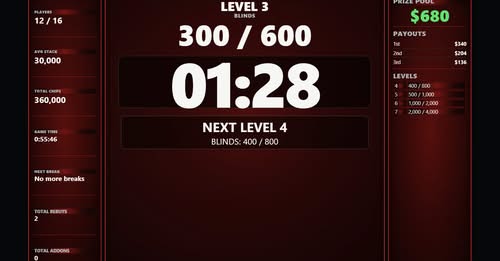
Keep the schedule visible so players can see the current blinds and what comes next.
4. Set up the tables
Have cards, dealer buttons and enough seats ready before players arrive.
For a game with multiple tables, decide how you’ll assign seats and move players as the field gets smaller. Explain the process before the tournament begins.
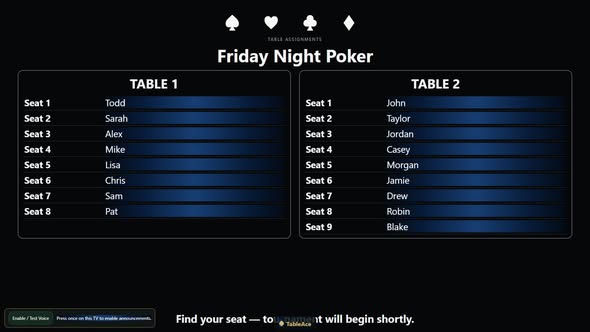
Test your clock and display setup, including your internet connection if you’re using an online tournament tool.
5. Agree on payouts
Explain how many places will be paid and how the prize pool will be divided before play starts.
Keep a clear record of entries, rebuys and add-ons. If players may agree to a chop near the end, explain how that decision will be handled and recorded.
TableAce can help track tournament amounts and results; it does not process player payments.
6. Keep the night moving
Once the game starts, keep the clock, player count and seating information up to date.
A shared display helps everyone follow the action without repeatedly asking the host about blinds or remaining time. Use planned breaks to check the tables and prepare for the next part of the evening.
7. Record the finish
At the end of the tournament, record finishing positions and payouts while the details are fresh.
Keeping results gives your group a history to revisit and helps you prepare for the next game.
For detailed advice on starting stacks, blind levels, rebuys and payouts, read our complete guide to running a home poker tournament.
Keep every detail in hand with TableAce
TableAce brings invitations, tournament setup, seating, the clock and results together in one browser-based tool.
Spend less time chasing details and more time enjoying the game with your players.
Around the table